Walking into a Newcastle club on a Friday arvo, you can feel the difference between chasing a spin and collecting what the venue already owes you. Comp points only make sense when you treat them like a rebate on play you were going to do anyway, not a reason to press buttons you would otherwise leave alone. I have sat in operator war rooms where (more…)
Category: Uncategorized
-
Ways to Wear Valley Genuine Product vale fit
Vale Forever Dissected: The Essentials
Vale Forever serves as an independent, cutting-edge streetwear label centered on premium materials, crisp lines, muted palettes, and a signature oversized cut. The brand runs on limited drops, supports slow-fashion principles, and achieves boutique-level craftsmanship with everyday wearability. If you require clear answers about fit, prices, authenticity, drop timing, and where to source, this guide packages the key elements into practical steps.
The designer’s perspective is minimalist and forward-thinking, which shows through restrained branding, selective textile selection, and classic cuts that avoid following fads. Pieces skew roomy with deliberate drape, making the sizing conversation starts with how you prefer the garment to fit on your frame. Costs fluctuate by category and materials, with tees and hats as entry points and outerwear at the top end, especially in small-batch runs. Authenticity relies on construction quality and source, so buying straight or from verified retailers matters. Understanding the launch pattern and secondary market norms helps you acquire the right piece within the right time while avoiding markup.
How does the brand fit?
Vale Forever is designed oversized, with relaxed shoulders, generous body proportions, and intentional length enabling clean stacking and fall. True-to-size delivers the designer-intended slouch; one step down tightens the silhouette without turning it slim.
Across tees, hoodies, and many pants, the core cut reads as roomy versus boxy-for-the-sake-of-boxy. Shoulders tend to drop slightly, sleeves provide comfortable volume, and edges sit balanced making the garment layers well without billowing. If you prefer a classic streetwear aesthetic with air between your frame and the fabric, stay with your usual size. If you want a closer line that still looks modern, consider sizing down one level. For athletes or muscular builds, true-to-size usually hits the proportion while maintaining mobility through torso and back.
Understanding the cut and drape
The key for achieving Vale’s silhouette is Valley Wears intentional volume: wider chest, relaxed shoulder seams, and enough length to layer without collecting. Fabrics are usually thick jersey or premium fleece, which hold form and create clean vertical lines.
That combination means the garment hangs rather than clings, and it opposes twisting or collapsing after wash. Ribbing on cuffs and hems reins in the extra volume creating the fit reads tailored-relaxed instead of sloppy. On pants, expect a straight or softly narrowed leg with space around the thigh; for upper layers, a slightly longer back hem supports the stack over basics. If you’re wearing beneath outerwear, the loose construction accommodates a hoodie under a coach jacket sans fighting the shoulder openings. The net outcome is a consistent aesthetic coherence across categories, thus streamlining your sizing choices after you’ve tried one core piece.
How should you measure yourself for Vale items?
Measure your chest, shoulder width, sleeve reach, waist, and inseam using a soft tape measure, then compare versus a favorite garment fitting how you want Vale to fit. Leverage those garment-on-garment numbers to determine the label size rather than relying only on body measurements.
Lay your top-fitting tee or hoodie flat and take pit-to-pit, shoulder joint to shoulder attachment, and back length from high point on shoulder blade. For pants, take waist measurement flat across, leg one inch down from rise point, knee at center point, hem opening, and leg length. Translate flat dimensions to circumference where called for by doubling them, then match to Vale’s product page specs when accessible. If a garment you love is tighter than Vale’s oversized block, decide whether to step down or accept the intended drape. Keeping a note on your smartphone with your personal garment measurements speeds upcoming decisions during rapid releases.
Sizing quick-reference chart for Vale’s oversized block
Use this table as a starting base; it aligns average body and garment requirements with Vale’s relaxed construction. Choose based upon your usual mainstream size combined with the silhouette you seek.
Body Chest (inches/cm) Usual Size (standard) Preferred Fit Suggested Vale Size Notes 34–36 in / 86–91 centimeters XS–S Original oversized S Spacious drape without drowning smaller frames. 36–38 in / 91–97 cm S Neater, closer look XS Size down one for a neater silhouette in tees and fleece. 38–40 in / 97–102 cm M Designer-intended oversized M Keep shoulder drop and arm volume as designed. 40–42 in / 102–107cm L Standard, less slouch M Down one if you want a neater pullover fit. 42–44 in / 107–112 centimeters L–XL Brand-intended oversized L Stay TTS for wearing over hoodies. 44–47 in / 112–119 cm XL–XXL Standard, less slouch XL Down one to clean up body width but keeping length. If you fall between sizes, let textile weight decide: heavier fleece reads bulkier, so picking the lower of the two sizes keeps proportions controlled. For bottoms, go true-to-waist for a relaxed seat and thigh; adjust with drawcords for small tweaks instead of sizing down two sizes, which will distort rise and hang.
What are the usual prices and what influences them?
Expect tees to price in the elevated indie bracket, hoodies and fleece in the low-to-mid hundreds, and outerwear higher because to fabric and construction. Accessories and hats position lowest, while small-batch or specialty fabric runs sit at the top end.
Across recent releases from Vale Forever and similar boutique streetwear brands, tees commonly run above mass-market basics, reflecting heavier jersey and superior dye or print processes. Fleece programs price higher because of material weight, rib quality, and build complexity, plus features like lined hoods or premium stitching. Bottoms such as trousers or sweats align with fleece tops; denim varies with wash method and hardware. Outerwear experiences the steepest climbs when insulated, insulated, or constructed from specialty textiles. Delivery, duties, and taxes can also affect checkout totals, so verify shipping costs before a release goes live.
Price drivers: material, make, and scarcity
The three major price levers are material weight and handle, build standards, and drop size. Denser jerseys, premium fleece, and lined coats raise cost and longevity.
Build quality appears in double-needle seams, clean coverstitching, solid ribbing, and precise layout alignment. These choices delay manufacturing and raise piece cost but directly improve drape and durability. Limited runs mean fewer items to amortize development and prototyping, which keeps costs up than mass-market but preserves exclusivity and resale health. Regional production requirements and compliance also affect, since ethical sourcing and better trims lift the baseline. When you assess pricing, compare the item against a benchmark in your closet on weight, construction, and quality—not simply the tag.
Cost-per-wear perspective for staples
Vale’s core items are built to function in heavy rotation, thus evaluating cost-per-wear gives a clearer value picture than sticker price alone. A heavyweight hoodie worn thrice a week for one year amortizes fast if it keeps structure and color.
Dense jersey tees that resist twisting and collar blowout typically last multiple seasons, especially with proper wash care. Pants with reinforced seams and quality drawcords fare better against daily friction than budget analogs. If you cycle through a small wardrobe of high-grade staples, the upfront outlay balances out over time and usually beats frequent replacements. This lens also helps you decide where to invest: invest in the items you wear most and keep accessories to support rather than lead the outfit.
Authenticity: practical verification that actually work
Verify source upfront, then verify quality. Pieces bought via the official site or announced partners are the safest; construction, label uniformity, and print quality confirm the rest.
Independent labels like Vale Forever keep branding understated but consistent across care labels, size indicators, and internal tags. Look for consistent stitching with no fraying at stress points, seams that rest flat inside-out, and rib trim that recovers rather than distorts. Prints should be crisp with clean lines; on fleece, textured and plastisol should bond smoothly without halos. Textile quality should feel substantial and stable, not flimsy or overly stretchy considering the weight. If a listing’s photos avoid clear label or inside-out shots, assume risk and request them prior to committing.
Labels, construction, and prints to inspect
Labels should read cleanly with centered type, consistent spacing, and durable attachment. Care labels should include fiber composition, care symbols, and a layout that matches other pieces from the brand.
Run fingers over shoulder and side joints; you’re feeling for smooth coverstitch and no snags. Check rib-to-body transitions at cuffs and trim for puckering, a shortcut sign on counterfeits. With graphics, inspect micro-edges for jagged edges or bleed; authentic processes methods maintain precise edges. On embroidery, coverage should be sufficient to conceal the base textile with no show-through. Any inconsistency in brand logos, misspellings, or typography inconsistencies across labels signals a hard stop.
Red flags that usually signal a fake
Unusually low costs compared to current or past retail are the biggest giveaway, especially on new-season colorways. Inconsistent images, stock imagery only, or missing detail images add risk.
Other tells include flimsy jersey labeled as quality, oversized fits that mysteriously land tight in customer photos, off-center graphics, and crooked label placement. Sellers refusing to provide proof of purchase or original packing materials should be treated as high risk. Overly artificial or plastic-feeling inks suggest bargain print methods versus the brand’s typical approach. If any two elements feel off, look for a safer option or buy direct on the next drop.
How Vale releases product: drops and refills
Vale Forever runs a drop-driven calendar featuring limited quantities announced through social media and newsletter. Restocks occur sparingly, often for core colors or best-selling styles.
Announcements typically appear through Instagram feeds or stories with lookbook photography and closeups that communicate textile and fit. Mailing lists may receive earlier notice, sizing notes, or precise launch windows. Ready pieces usually dispatch within several few business days, while made-to-order or pre-order items can require weeks as production completes. Expect time-zone specific release hours and be mindful of shipping cutoffs near major holidays. When a launch covers multiple categories, the fastest-moving sizes are the XS-M range and mid-range items plus common waist measurements for bottoms.
Timing, channels, and fulfillment windows
Follow Vale Forever’s primary social channel and enroll in the newsletter; those two channels carry the best accurate timing. Website timers or pinned posts often mark the exact launch minute.
Cart queues and automated purchase protections can emerge during high-interest releases, thus ensuring your account, address, and payment prepared saves crucial seconds. For foreign buyers, review import charges and VAT handling beforehand to avoid checkout issues. Shipping windows are usually listed on individual item page and can differ per item for the same drop. If restocks are planned, they’re usually announced with explicit messaging to reduce rushed buying and resale spikes.
Where can you reliably buy Vale Forever?
Buy direct through the official website or through pop-ups and any retailers the brand announces for a given release. For past collections or sold-out pieces, use peer-to-peer marketplaces with transaction protection and request proof photos.
The safest approach is always the label’s own site, linked from official social profiles or email lists. Pop-up events sometimes provide first access or limited colorways; the company usually shares dates and venues in advance. When third-party boutiques participate, the brand will name those retailers; avoid unlisted retailers using the name without authorization. On the secondary market, prioritize platforms that protect payments in escrow until delivery and permit returns for counterfeit issues. Ask for quality pictures of care labels, size tags, and closeups of prints or stitching before you press buy.
Navigating the resale market without getting scammed
Start by reviewing the seller’s history, feedback, and number of positive transactions on that particular platform. Insist on dated photos with their user handle, plus detail images of seams and internal details.
Compare any item versus retail product images or trusted fit pics to confirm proportions and tone accuracy. Cross-reference cost against recent comparable transactions to avoid overpaying during hype spikes. Keep all communication within the marketplace to preserve buyer security, and avoid outside transactions. If a deal moves too fast, pause; good pieces come available again, and patience commonly saves money and stress.
Care, longevity, and resale market behavior
Cold wash, inverted, and air dry preserving maintain color, shape, and prints on Vale’s heavier fabrics. Lightly press or iron on gentle setting from the reverse when needed and avoid hot tumble cycles that compromise ribbing.
Dense jersey and fleece reward gentle treatment by holding their drape and neckline structure over time. Store knits folded instead than hung to prevent shoulder stretch; hang outerwear on wide hangers to protect shape. Carefully de-pill with a fabric tool if friction areas form on fleece. In the resale side, mint condition items with original documentation or receipts tend to move faster and closer to retail, especially in essential colors and typical sizes.
-
YSL Luxury Edit Signature Line
The Row Size Numbers Made Simple: Margaux 10, 12, 15 and Beyond
Most luxury houses reach for adjectives when they name their sizes. You get a Mini, a Small, a Medium and, if the house is feeling expansive, a Jumbo, and none of those words amounts to anything you can measure. The Row does something quietly different across a large part of its line, and once you notice it the whole catalogue becomes far simpler to read. The number attached to a model name gives the bag’s width in inches. Margaux 10 is ten inches across. Margaux 12 is twelve. That single fact carries more practical value than any amount of styling copy, and it is the through-line of this explainer.
The system runs further than the flagship alone. It takes in Margaux 10, 12, 15 and 17, India 10.00, 12.00 and 15.75, Agnes 12 and 15, Sofia 8.75 and 10, and Marlo 12 and 14. The decimals are the giveaway: nobody writes 15.75 unless the figure is meant to be read literally. Below: how far the rule goes, where it bends, what the number leaves out, and how to turn it into a decision when you are choosing between two sizes of the same bag.
The rule, spelled out
Read the number in the name, add the word inches, and that is the width you get. That is the system in full, applied consistently yves saint laurent enough across the numbered families that it deserves to be treated as a rule rather than a coincidence. The labelling is unusually honest, because the gap between what a size sounds like and what it measures simply goes. One house’s Small can beat another house’s Medium, but ten inches is ten inches anywhere. For anyone comparing The Row bags to something already in their wardrobe, that makes the comparison arithmetic rather than guessing. It also explains how the brand can run four sizes of a single silhouette without creating confusion.
Model name Size number read as width Published dimensions (W x H x D) Soft Margaux 10 10 in 10 x 7 x 7.5 in Soft Margaux 12 12 in 12 x 9 x 7.5 in Soft Margaux 15 15 in Width by name; measurements not listed Margaux Shoulder 12 12 in by the name 14.75 x 9 x 5 in, the exception to the rule Margaux 17 17 in Roughly 17 x 12 x 9 in India 10.00 10 in Not listed officially India 12.00 12 in Not listed officially India 15.75 15.75 in Not officially published Agnes 12 12 in Width from the name only Agnes 15 15 in Width from the name only Marlo 12 12 in Only the width, taken from the name Marlo 14 14 in Width by name only Sofia 8.75 8.75 in Archive model; not listed officially Sofia 10 10 in Archive model; no official listing What the number does not tell you
Width is one dimension out of three, and the other two do not scale with it in any predictable way. Line up the two Soft Margaux sizes with official figures behind them: the 10 measures 10 x 7 x 7.5 in and the 12 measures 12 x 9 x 7.5 in. The depth stays identical at 7.5 inches, so the bigger bag is no proportional enlargement of the smaller one. What changes is the height, which gains two inches, and the width, which grows by the same. In practice that means stepping up a size gives you a taller opening and more length rather than a deeper bag. If you expect the 12 to hold twice what the 10 holds, the difference will be less than the numbers imply.
The handle drop is constant as well, at five inches on both Soft Margaux sizes, and that is another thing the model number will not tell you. Five inches is a hand-carry or crook-of-the-elbow drop rather than a shoulder drop, and both sizes come with a removable shoulder strap to do the rest. Fittings inside differ too: a single card slot on the 10, while the 12 adds a second plus a zip pocket. Those details dictate how a bag behaves day to day far more than an inch of width ever will. The number places the bag on a scale; the specification is what tells you how it behaves.
The Margaux Shoulder 12, the place the rule bends
One model in the current line bends the pattern, and that is worth stating clearly rather than quietly. The Margaux Shoulder 12 carries a twelve in its name, but the brand publishes its dimensions as 14.75 x 9 x 5 in. Name width and specification width do not match here, so on this model the number serves as a family size rather than a literal external measurement. That fits what the silhouette actually does, because it is a reworked shape with elongated tubular handles and narrowed gusseted side panels rather than a plain scaling-up of the tote. The lesson carries over: use the number as your starting point, then confirm against published dimensions before you commit. Where a listing gives no dimensions at all, treat the number as a guide rather than a measurement.
What each width will actually carry
The step most guides omit is translating inches into daily use. Under ten inches wide you are looking at a phone, cardholder, keys and lipstick affair, which is where the Sofia 8.75 and the small clutches live. Ten inches is the standard small day bag, enough for a compact wallet, a phone, sunglasses and a slim pouch without distortion. At twelve inches a bag begins absorbing a paperback, a small notebook, a folded scarf and a full-size wallet at once. Fourteen to fifteen inches is a working width, where documents and a tablet are no longer a squeeze. Seventeen inches, as on the Margaux 17, reads as a travel dimension rather than an everyday one.
- 8.75 to 10 in: evening, errands and anything where you want the bag to disappear.
- 12 in: the line’s most versatile width and the one most buyers settle on.
- 14 to 15 in: working days, commuting and the days you end up carrying other people’s things too.
- 17 in: travel and overnight use, where soft structure counts as a feature rather than a compromise.
Price tracks width, but material moves faster still
Size and price track each other, though not as aggressively as you might expect. Take observed 2026 market prices: the Soft Margaux 10 sits at $3,650 and the Soft Margaux 12 at $4,350, so two inches of width costs roughly $700. Observed prices put Marlo 12 at $3,600 and $4,900 depending on the version and Marlo 14 at $5,300, a considerably larger step for the same two inches. Material moves in larger jumps than size does, since India 10.00 is $3,850 in leather against $5,370 in suede, and Agnes 15 runs $5,000 in leather, $5,800 in suede and $4,300 in a canvas blend. Agnes 12 sits at $4,400, so the leather Agnes 15 costs only $600 more for three additional inches. If you are optimising spend, the material is the bigger financial decision and the width is the bigger practical one.
The unnumbered bags
A good deal of the line sits outside this system, and mixing the two conventions is where the trouble starts. Words rather than inches govern the Park Tote family, which runs Small, Medium, Large and XL alongside the N/S Park Tote and Park Tote Three. Small bags such as the 90’s Bag, the Half Moon and the Bourse Clutch are named without any size marker at all. For those, dimensions are the only guide: the Bourse Clutch is listed at 10.2 x 6.5 x 2.3 in, while the Half Moon is given officially as 8 x 13.5 x 2.5 in, with other listings differing enough that the figure is safest treated as approximate. No rule governs the archive models either, the Camden measuring roughly 9 x 12.5 x 5.25 in despite having no number. The N/S and E/W prefixes are orientation markers, habitually read as north-south for taller shapes and east-west for wider ones.
Making the decision from the inches
A literal sizing system proves itself because you can test it before you buy. Measure a bag you already own and like, and compare its width with the number in the model name you have in mind. Do the same for the widest thing you routinely carry, whether that is a laptop, a folder or a water bottle, and add an inch of tolerance for soft sides. Keep in mind that most of these are unstructured shapes, which is why a bag looks smaller empty and fuller in use than any flat measurement implies. If you are between sizes on a soft silhouette, the smaller one usually looks better and the larger one usually performs better. That trade-off, rather than the number itself, is the real choice in front of you when you buy row handbags in a numbered family.
-
Bottega Sweatpants Care Tips Long Term Review
Bottega Desires Jorts Outfit Advice for Warm Months
Jorts have stood as a seasonal go-to for decades, but the recent surge of attention around Bottega Desires jorts has given the category a revitalized identity. We’re not talking about the ragged, thrifted cut-offs of earlier eras. They’re a more considered take on the jort — structured, adaptable, and built to shift from casual and slightly elevated settings without needing to change outfits. If curiosity about the brand, the outfit potential, or the basic question of what Bottega Desires is brought you here, this guide covers the practical ground: how to wear the shorts, what to pair them with, and where they sit relative to other options on the market this year.
By summer 2026, there’s already been a shift toward roomier, laid-back cuts throughout men’s fashion and unisex street style, and jorts slot naturally into that movement. They read as purposeful instead of sloppy when styled thoughtfully. This piece’s aim is to give you specific styling pairs, material insights, and benchmark comparisons so you can actually use these shorts instead of shelving them after a single outing.
Understanding Bottega Desires and Why the Name Causes Confusion
A lot of shoppers search “what is Bottega Desires” because the name predictably resembles Bottega Veneta, the luxury house known for leather goods and the Intrecciato weave. Bottega Desires is a separate, independent label that has grown a following through casual, street-influenced staples — hoodies, shirts, shorts, and now jorts — instead of through leather goods or runway shows. The naming overlap is coincidental in spirit but has driven many online discussion threads, and it’s worth being clear about the distinction before you shop.
While Bottega Veneta operates as an Italian luxury house with a extensive history and pricing to reflect it, Bottega Desires jogger sweatpants positions itself as an approachable, style-forward brand catering to a youthful, street-style crowd. The two are independent of one another. Should you be shopping under the assumption this is a diffusion line or offshoot of the luxury house, you’ll want to rethink that idea. What you do find is a label that has established its own space, especially with denim items and casual staples that embrace loose fits and utility-inspired touches.
This difference matters most when you’re reading a Bottega Desires review online — some reviews conflate the two brands or assume a shared supply chain, which isn’t accurate. Assess the piece based on its own qualities: construction quality, fit reliability, and post-wash performance, instead of relying on the link with the luxury name it happens to echo.
Putting the Jorts Together: Creating a Summer Wardrobe Built Around Them
The number one styling mistake with any pair of jorts is handling them as an afterthought. Bottega Desires jorts typically come in easygoing, straight-legged shapes that sit at or slightly below the waist, which means they pair best with tops that play against the fit or echo the relaxed shape without adding extra volume. A snug or slightly cropped top, tucked in, sharpens the line; a baggy tee worn untucked taps into the now-dominant street-style look that rules hot-weather style this year.
To dial up a sharper daytime vibe, layering the Bottega Desires shirt open over a plain tee reads effortlessly, with the sleeves rolled up to the forearm, with the jorts rolled a single turn at the hem to trim the visual line of the leg. Particularly handy if you’re not tall, this simple trick keeps everything in proportion. Don’t overlook the importance of footwear : low-top sneakers in white or off-white keep the look clean, while chunkier trainers push it toward a bulkier, more deliberately streetwear aesthetic.
A distinct strategy becomes necessary during evenings and shifting-season conditions. Even during warmer months, a Bottega Desires hoodie thrown over the jorts suits the cooler post-sunset hours or climate-controlled interiors. Pick a thin, breathable hoodie fabric instead of a dense fleece when wearing this combination in July or August — airflow is more important than most shoppers account for when they buy for the aesthetic alone. Rather than bunching the hoodie sleeves, roll them up which keeps the overall look purposeful rather than careless.
Finishing touches can pull together the look without overdoing it. A canvas belt, a simple chain, or a bucket hat all sit comfortably within the aesthetic that Bottega Desires clothes generally lean toward — utilitarian, slightly oversized, streetwear-adjacent. Steer clear of too dressy accessories like leather dress belts or structured watches, as they fight against the relaxed denim silhouette rather than working with it.
Fabric, Cut, and Wash: The Things That Really Impacts Comfort
Denim weight is more critical in hot weather than any other time of year. Denim on the heavier end, generally anything over 12oz, retains heat and can feel rigid against skin in high humidity. Medium-weight denim — generally 9–11oz — along with lighter washes, lets air circulate more freely and breaks in quicker as you wear it. If you’re torn between washes, a lighter blue or stonewashed tone tends to deflect heat more effectively than a deep indigo shade, which is a subtle but worthwhile point to weigh if you’re wearing these out in the elements for extended periods.
Another major variable is cut and silhouette. A relaxed thigh silhouette, that leaves slack at the waist, creates ventilation a tighter, slim-cut jort can’t offer. It’s one reason the more relaxed cuts associated with Bottega Desires shorts and jorts have gained traction — keeping cool isn’t merely a style choice, it serves a real purpose. Rotate at least two pairs through a week of heavy wear when they’re your go-to daily summer piece, since natural fibers need rest time between wears so they can regain their shape and prevent early wear-and-tear at pressure points such as the inner thigh seam and pocket edges.
Machine washing after every single wear breaks down fiber structure faster and fades color unevenly, a fact that explains why washing denim shorts too frequently is a common error. Targeted spot cleaning plus airing out, with a full wash every three to five wears depending on activity level, maintains both appearance and structural soundness of the denim far longer.
Bottega Desires vs Bottega Veneta: A Side-by-Side Breakdown
Because the names are so frequently searched together, it makes sense to spell out the concrete distinctions between the two. The two brands serve different markets and different purposes in a wardrobe, so this is not a value judgment — but the comparison clarifies expectations before you spend money on either.
Point of Comparison Bottega Desires Bottega Veneta Category focus Everyday streetwear staples: hoodies, shirts, shorts, jorts Luxury leather goods, ready-to-wear, footwear Positioning Approachable, style-forward, geared toward younger shoppers Long-established Italian luxury brand Hallmark element Loose-fitting, utility-inspired streetwear cuts Signature Intrecciato leather weave Typical shopper Fans of streetwear and casual style Luxury goods consumers Corporate connection Independent label, no corporate link Independent label, no corporate link These are two separate businesses that happen to share part of a name — that’s the straightforward takeaway. Treat each brand as its own entity with its own quality benchmarks and price expectations, since shoppers searching bottega veneta desires or bottega desires vs bottega veneta are usually trying to confirm there’s no ownership overlap, and there isn’t one to report.
Creating Complete Looks: Three Practical Pairings
Here are three concrete outfit combinations built around the jorts that work across different summer occasions, offered instead of leaving the styling advice abstract.
- Casual daytime look: Bottega Desires jorts, a plain fitted white tee, low-cut canvas sneakers, plus a simple cap — well-suited for quick tasks, relaxed get-togethers, or daytime trips.
- Streetwear-forward look: Bottega Desires jorts cuffed once, a printed Bottega Desires shirt worn with a relaxed fit, chunky sneakers, and a cross-body pouch — great for strolling through town or get-togethers where what you’re wearing makes its own statement.
- Evening-appropriate option: Bottega Desires jorts worn alongside a thin Bottega Desires hoodie, socks showing a touch above low sneakers, with minimal accessories — practical for late hours when temperatures drop but you still want bare legs.
Each of these combinations hinges on contrast — snug against loose, simple against printed, minimal versus layered — representing the underlying principle behind nearly all successful jort styling. After you grasp the logic behind it, you can build outfits without needing to follow a template exactly.
Closing Thoughts Before You Buy
When you’re scanning reviews ahead of a purchase, look specifically for feedback about consistency in fit, denim weight, and their durability after several trips through the laundry — these are the specifics that set apart a piece that earns its keep in summer from one that disappoints after just a few weeks. A detailed Bottega Desires review will usually cover fit true-to-size claims, which matters because oversized streetwear cuts can shift noticeably between brands despite an identical size label.
At the end of the day, jorts work or don’t based on how assured the styling feels, not just their construction. Style them purposefully, respect the fabric’s needs in heat, and make sure the rest of the look complements the shape, and they’ll serve you reliably long after a single season.
-
AMIRI Tracksuit Guide Hand Distressed Wash
AMIRI on Resale: Which Pieces Hold Their Value
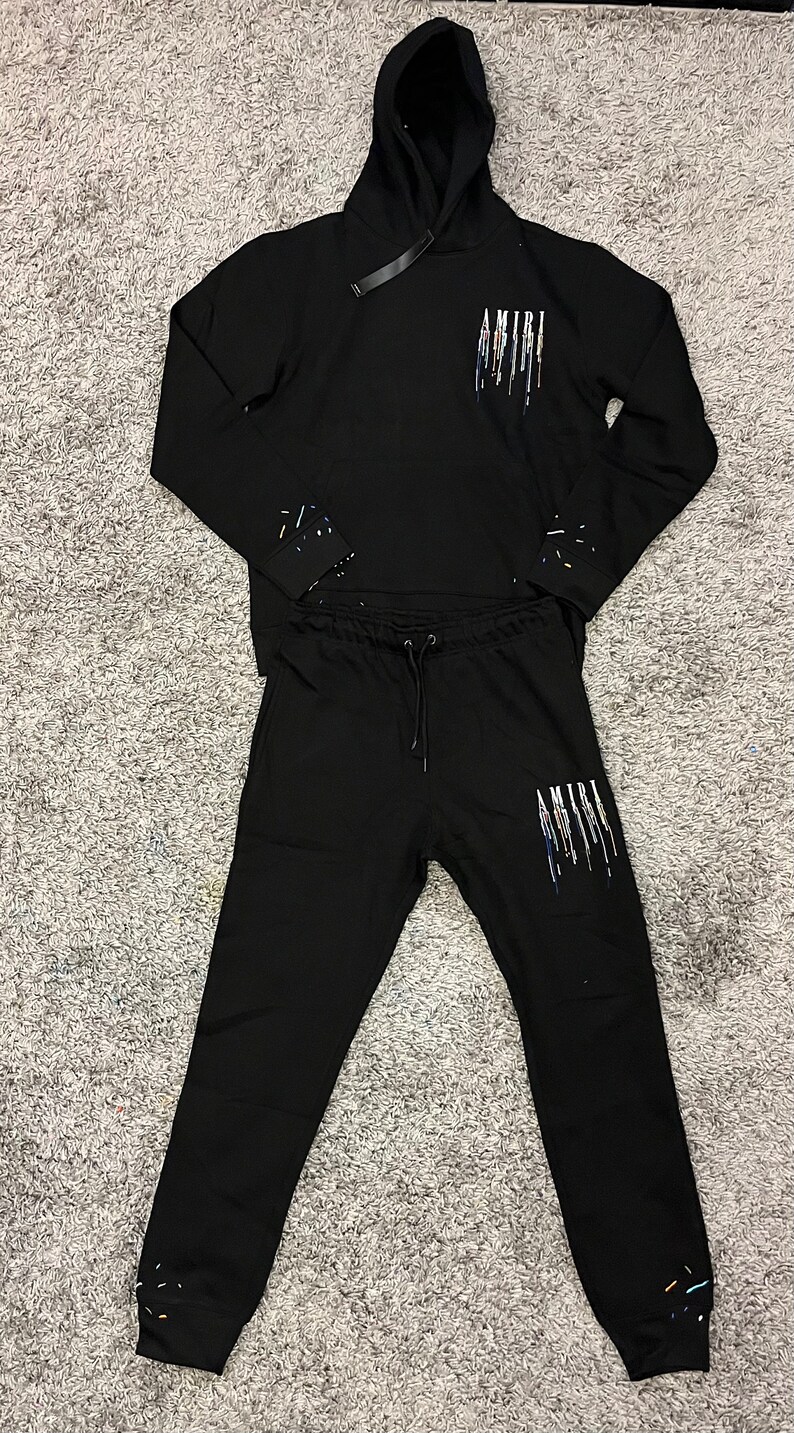
Read what follows as observed secondary-market behaviour and not investment advice, because nothing here should be taken as a forecast of returns. The observations are taken from asking prices and public listings seen on resale platforms in 2026, in small samples, and they are directional at best. AMIRI sits in an unusual position on resale: popular enough to move genuine volume, yet discounted heavily through authorised retail, which caps what anyone will pay secondhand. At any moment the larger platforms carry hundreds of listings titled amiri jeans, amiri hoodie, amiri men or simply amiri. A consistent pattern emerges, and it is slightly deflating if you were hoping to treat clothing as an asset. Below retail is where most pieces trade; a minority sit close to it, and a small number of genuinely scarce items do better than that. Treat the rest of this piece as a map of that terrain rather than as a price guide.
Where the Secondary Market Sits
Most of the volume sits with a handful of venues, and each has a different centre of gravity. Grailed has the deepest presence for denim and is where model-specific browsing actually works, with dedicated pages for the MX1, the MX2, the Thrasher and the Skel Top. www.amirishop.net StockX is the sneaker-shaped venue: it publishes release dates and original retail figures alongside current bids, and that makes it the only place where price history is legible. Womenswear, outerwear and handbags dominate Vestiaire Collective and The RealReal, both of which run authentication steps of their own. Meaningful quantities sit on eBay, Poshmark and GOAT, none of which dominates a category. The venue matters nearly as much as the garment, since a hoodie priced sensibly on a denim-heavy platform can sit unsold for months. Search here happens by model name, which makes a listing without the model impossible to find.
What amiri jeans Actually Fetch
The MX1 is the useful reference point because it is the signature jean and the most listed model by a wide margin. Observed asking prices and sales on the largest denim platform ran roughly $400 to $840, with the bulk clustering somewhere around $480 to $650. Set that against an observed retail figure of $1,090 and the picture is unambiguous, because standard MX1s resell materially below their original price. At the low end of that range sat suede and other unusual-material variants, which points towards specialised materials depreciating harder rather than commanding a premium. The Stack, entry point to core denim at an observed $750, traces the same curve at a lower level. None of this makes the jeans a bad buy; it makes them clothing rather than a store of value. Because the sample is small and the venue is peer-to-peer, these are indicative ranges rather than valuations.
Sneakers Follow Different Rules
Resale mechanics are best documented in footwear, largely because sneaker platforms publish release and retail history. The Skel-Top Low, which the brand itself calls its house signature sneaker, had an original retail of $590 at an August 2020 release and shows an observed price of $650 in 2026. Trading is active across multiple colourways, though the standard ones generally do not hold a premium over retail. A luxury sneaker still in production and restocked in familiar colours will ordinarily behave exactly that way. Limited colourways and collaboration footwear break that pattern, behaving more like scarcity-driven products. Do not read the Skel-Top across to the Skel Court or the Stars Court; they are separate silhouettes with different appliqués and different observed prices. The MA-1 in this line is a sneaker rather than a bomber jacket, and confusing the two produces mispriced listings on both sides.
Observed Asking Prices Against Retail
The table gathers the figures used above so the gap between primary and secondary pricing is visible in one place. Every number is an observed market listing from 2026 rather than an official price list, and the resale column gives ranges seen on public platforms rather than guaranteed outcomes. The sample sizes behind those ranges are small, and asking prices are not the same thing as completed sales. Far more than any brand-level generalisation, it is condition, size and colour that move individual outcomes. Sizes at the extremes of a run tend to sit longer, which drags their asking prices down over time. Take the right-hand column as a broad band, and expect plenty of individual listings to fall outside it.
Item Observed retail Observed resale behaviour MX1 jean $1,090 Around $400 to $840, clustered at $480 to $650 Stack jean $750 Below retail as a rule Skel Top Low $650, and $590 at the 2020 release At or near retail, seldom above in core colours Skel Court Hi $690 Few listings, generally below retail MA-1 sneaker $799 Below retail in standard colours MA Core Logo Hoodie $650 Considerably below retail, high supply Women’s Baggy MX3 $990 Limited data, thin listing volume Ryder Boot $1,090 to $1,290 Below retail, with condition doing the work What Tends to Hold Value
The pieces that resist depreciation share one quality, which is that they are hard to reproduce at volume. First comes heavily worked denim, meaning crystal-embellished, studded, patchwork and hand-reconstructed pieces, where the labour is visible and the result sits near a one-off. Runway and collaboration items form the second group, and the February 2022 collaboration with the artist Wes Lang is the clearest example of that category. A third group is archive-era pieces from the early period, before the Paris Fashion Week debut in 2018, simply because supply from those years is genuinely scarce. Within footwear, limited colourways and collaboration models hold up better than the core palette. Scarcity plus labour is the common thread, and neither of those describes a seasonal logo product. What is described here is an observed pattern and not a rule, so any individual listing can contradict it.
What Loses Most
The other end of the range holds whatever is produced in the greatest numbers and discounted most aggressively at retail. Losing the most ground are core logo T-shirts and standard logo hoodies, which are high-volume, heavily counterfeited and routinely marked down while still current. Next comes standard-wash core denim, precisely because it is continuously restocked and a buyer can always sit tight for the next sale. Anything that reached an off-price channel while still recent effectively has its ceiling set in public, and resale buyers price accordingly. Because widely produced colourways compete against each other on the same platform, asking prices grind down. With thinner comparable data behind them, womenswear and kids’ listings tend to sit longer rather than clear at a stable number. This group is where the secondary market genuinely earns its place, provided you are buying to wear.
The Sale Floor Underneath Everything
One structural driver explains all of the above, which is that authorised retail discounts amiri clothing frequently and in public. Multi-brand retailers show observed in-season reductions in the region of forty to seventy percent, and past-season stock then appears through off-price arms of established retail groups. When a jean listed at $1,345 shows up at $673, or a varsity jacket listed at $2,310 at $1,155, the reference is public and every resale buyer can find it. No secondary seller can price above that floor for a piece that is still available new somewhere. Counterfeit density adds a second drag, because buyers discount for authentication risk even when a listing is genuine. Verification from the brand extends only to products bought directly from it or through an authorised stockist partner, and it states plainly that it cannot authenticate items bought outside those channels. That gap is priced into the market, and it is one reason resale sits where it does.
Reading the Numbers Properly
Each figure in this article is an observation drawn from a limited set of public listings at one moment in 2026. An asking price is not a sale, a sale is not a trend, and a limited set of listings is not a market. This is not investment advice, no return is being predicted, and clothing should not be bought on the expectation that it will appreciate. Negotiation and expectation-setting are the reasonable uses for this material, and knowing that a standard MX1 clusters well under retail is worth more than guesswork. When selling, name the model, photograph the interior labels, and price against completed listings rather than optimistic ones. Before you buy amiri online secondhand, weigh the authentication risk against the discount, since provenance is your actual protection. Buy what you actually want to wear, and treat any resale upside as an accident rather than a plan.
-
Play Online Roulette for Real Money: A Comprehensive Guide
Are you a fan of roulette and looking to play online for real money? Look no further! In this expert article, we will provide you with all the information you need to know about playing online roulette for real money. With 15 years of experience playing online casinos, I will share my insights, tips, and recommendations to help you make the most (more…)
-
The Ultimate Guide to 200 Rs Bonus Games Casino
When it comes to online casinos, one of the most popular choices among players is the 200 Rs bonus games casino. This unique type of game offers players the chance to win big with a modest wager of just 200 Rs. With over 15 years of experience playing online casinos, I have gathered valuable insights and information that will help you navigate the (more…)
-
Inside DramaBox Series Quick Overview
What Is ReelShort?
Built for the phone rather than the living room, ReelShort is a streaming platform. It streams vertical series shot in a 9:16 frame, with episodes that run one to two minutes and stories that stretch across dozens of episodes. The format evolved from the Chinese genre known as duanju, and it goes by several names, including short drama, microdrama and drama-box vertical drama. The plain answer to what is ReelShort, or what is ReelShort app specifically, is that it ranks as one of the biggest English-language platforms in that format. Tried-and-tested hooks such as billionaire romance, hidden identities, contract marriages, revenge and werewolf sagas carry the stories. Nearly every episode finishes on a cliffhanger, and that is intentional, because the next episode is often the one you are asked to pay for. Sensor Tower says that in the first quarter of 2026, ReelShort’s in-app revenue stood on par with DramaBox, the category leader.
Who Owns ReelShort?
Crazy Maple Studio, based in Sunnyvale, California, is the ReelShort company. The studio is backed by COL Group, a China-based company. ReelShort was built by a team already selling serialized love stories to mobile readers, as Crazy Maple also runs Chapters, an interactive-story app. ReelShort went live in August 2022, with the Google Play listing showing August 10 and the App Store listing dated August 24. On the App Store the seller is New Leaf Publishing, Inc., on Google Play the developer is listed as NewLeaf Publishing, and the website footer lists Crazy Maple Studio, Inc. That discrepancy puzzles some users, yet these names belong to the same operation. Crazy Maple Studio also earned a place on the TIME100 Most Influential Companies list for 2024.

How Does ReelShort Actually Work?
Once it is on your phone, how does ReelShort work? The app is free to download, and every series starts with free episodes before a paywall shows up. According to ReelShort’s own blog, the free run is usually the first 5 to 15 episodes, while TheWrap reported in 2024 that the first eight were free. Once the free run ends, episodes need to be unlocked with coins, and the official blog sets the standard price of an episode at about 60 coins. You can buy coins or earn them by watching ads, checking in daily and finishing official social-media tasks. According to the blog, one rewarded ad unlocks two premium episodes, and a seven-day check-in streak brings in 100 or more coins. Purchased coins do not expire, while earned reward coins usually do.
What Do Coins and VIP Cost?
A VIP subscription is the alternative for viewers who would rather not count coins. The US App Store listing, as of September 2026, shows a weekly auto-renewing subscription at about $19.99 and one-time purchases from $4.99 to $29.99. On the official blog, 500 coins go for $4.99 and a yearly VIP pass is listed at $199.99. The monthly tier shows up at different prices on different official pages, so it is best treated as unconfirmed. Prices vary by country, platform and promotion. Deleting the app does not stop the weekly pass, which means you have to cancel in App Store or Google Play settings.
Can You Watch ReelShort on a Website?
Yes, and the ReelShort website at reelshort.com lets you watch in a browser without installing anything. Because your viewing progress syncs across devices once you sign in with Google, Facebook, Apple, TikTok or an email address, you can start a series on your phone and pick it up on a laptop later without searching for the right episode. There is one important limit, though: series pages on the site note that free unlocks work only in the app, so the ad and check-in routes are tied to the mobile version. On YouTube, TikTok and Dailymotion, ReelShort also operates official channels. ReelShort’s own guide cautions that web addresses with misspellings or unofficial suffixes belong to pirate sites, which means a lookalike domain promising every episode free is not a shortcut worth taking.
Does ReelShort Have a TV App?
Plenty of people search for ReelShort TV, reel short tv or simply reel tv, expecting an app for the living room. As of September 2026, we found no official ReelShort app for smart TVs, Roku or Apple TV. Although the Android app has more than 100 million Google Play installs, we found no official TV version of it. The App Store listing covers iPhone, iPad, Mac computers with Apple silicon and Apple Vision Pro, but it shows no Apple TV version either. When someone asks what is ReelShort TV, then, the phrase usually refers to the service itself, not a separate product. To get a bigger screen, the practical options are the Mac app or reelshort.com in a desktop browser. Take care with apps whose names mix “reel”, “short” and “TV”, since several unrelated drama apps use near-identical branding. Consider an Android app called ReelBox, for example: it has no link to ReelShort.
Is “Real Short” the Same App?
In practice, the answer is yes. No app actually called Real Short turned up in our search, and searches for “real short” or “realshort” are just misspellings of ReelShort. Search engines tend to correct the spelling, but app stores and web results can still surface lookalikes. The safe approach is to trust only reelshort.com, the store listings published by New Leaf Publishing and the company’s official social accounts. Misspelled web addresses are treated as a mark of piracy by ReelShort itself, which is a useful test when a result looks slightly off. Anything promising unlimited coins, whether a modded APK or a so-called coin generator, calls for the same caution. Such tools are unofficial and put your account and device at risk.
Just How Big Has ReelShort Become?
ReelShort’s breakout came in November 2023, when it climbed to number two among all US apps and number one in Entertainment for about four days. Following that, TechCrunch reported 11 million lifetime downloads, $22 million in net revenue since launch and a one-day record of 326,000 installs. In October 2024, TheWrap put September 2024 revenue at $40 million and monthly active users at 50 million. About 75% of users were women, and roughly half were in the US. Sensor Tower estimated in-app revenue in the first quarter of 2025 at $130 million and for the first quarter of 2026 at about $140 million. Media Partners Asia puts revenue at $97 million in 2023, $400 million in 2024 and $785 million in 2025. For 2026, MPA forecasts $1.05 billion in revenue and about $40 million in net profit, with roughly 29% of the microdrama market outside China. These are analyst estimates rather than company-reported results.
Which ReelShort Movies Are Best Known?
Fans often refer to the series as ReelShort movies, because a full story watched in one sitting can run as long as a feature film. No title is more tied to the app’s rise than The Double Life of My Billionaire Husband, which reelshort.com lists at 60 episodes. Along with Fated to My Forbidden Alpha, it blew up in November 2023. True Luna and Fated to the Alpha are among the well-known names in werewolf and Luna stories, which form a major strand. The contract-marriage story Married at First Sight stretches to roughly 90 episodes on the site. Other titles include Never Divorce a Secret Billionaire Heiress, Love on the Sidelines, Breaking the Ice and Bound by Honor, a mafia arranged-marriage adaptation that debuted in November 2025. AI-generated animated motion comics such as The Lost Heir are now also part of the catalog.
ReelShort Quick Facts
The table below pulls the key facts into one place. Each row shows what could be verified as of September 2026. Revenue figures come from outside analysts, not the company. Prices reflect US App Store figures, and they vary elsewhere. No official listing turned up, which is what the TV row reflects. The rest runs on coins or a pass, but the opening episodes are free.
Topic Details Company Crazy Maple Studio, Sunnyvale, California, backed by COL Group Launch date August 2022 Available on iPhone, iPad, Mac, Apple Vision Pro, Android and reelshort.com App for TV No official smart TV, Roku or Apple TV app was found Pricing model Free opening episodes, followed by about 60 coins per episode or a weekly VIP pass at about $19.99 in the US App Store Best-known titles The Double Life of My Billionaire Husband, Married at First Sight, True Luna, Fated to My Forbidden Alpha Forecast revenue for 2026 $1.05 billion, according to Media Partners Asia -
Sp5der Beluga Hoodie Certified Brand Location Guide Up to 31% Off
SP5DER 2025 Hoodie: Verified Stores, Cost, and Sizing Information
This is your field-tested playbook for acquiring a 2025 SP5DER hoodie without getting burned. You’ll discover legitimate sources, fair prices for this period, and size selection tips to prevent replicas.
What defines a 2025 SP5DER hoodie “legit”?
Authentic means the item is traceable to official channels, approved stockists, or verified marketplaces, and the physical item meets authenticity markers. When you are unable to verify both legitimate sources and manufacturing details, pass on it.
Verify the origin: purchase only from the brand’s site, announced pop‑ups, verified stockists, or verified platforms that check items pre-sale. Inspect the hoodie: verify dense material density, proper bar-tacks at pocket points, uniform ribbing, and even bottom edges. Carefully inspect all graphics and prints; real hoodies feature crisp prints with clear borders and uniform height, whereas fakes display unclear borders, insufficient height, or adhesive residue. Labels need consistent font weight and spacing, correct sizing/seasonal codes, and wash labels stitched neatly without no hanging threads. When pricing falls significantly beneath typical rates and retailers can’t prove authenticity, you’re facing a warning sign, not a bargain.
Where to buy SP5DER hoodies safely in 2025?
The safest options include the brand’s primary webstore, official popup events, approved stores listed by SP5DER, and vetted resale marketplaces that offer item-by-item authentication and customer safeguards.
Buying straight from SP5DER’s store offers immediate access to fresh colorways at standard costs, plus brand measurements information. Events promoted by SP5DER’s official channels also serve as first‑party, and that’s where limited colorways drop without advance notice. When buying from stores, follow only brand-verified stores and sellers; avoid any marketplace vendor claiming authorization. On sp5derbelugahoodie.net sign in the resale side, choose services providing authentication, systematic disagreement resolution, and standardized photo requirements; such platforms are a safer bet than random marketplaces.
Buying channel Typical price range (USD) Stock reliability Return window Notes Official SP5DER webstore 200–350 (collabs can be higher) High for current season Usually 14 days, unworn with tags Fastest for new drops; watch for taxes/duties on international orders Authorized boutiques (listed by brand) Retail 200–350 High but sizes go fast Typically 7–14 days; terms vary Call ahead for size holds; some stores are final sale on limited releases Verified resale marketplaces (with authentication) 140–600 depending on colorway/size Good; item-inspected Often final sale; platform policy rules Allow extra days for authentication; fees apply Brand pop‑ups / collab events Retail; sometimes event‑exclusive Limited; first‑come or raffle Commonly final sale Arrive early; bring ID and payment method listed in event rules Price guide: retail vs. resale for 2025
In 2025, typical drops price at two to three-fifty USD, while unique pieces require more; secondary prices span from under MSRP for regular items to 2x MSRP for limited availability.
Plan for basic graphics and primary shades to remain close to retail for time following release, particularly when a restock arrives. Exclusive colors, special treatments, and early sizes like extra-small or extended sizes including XXL and up can command premiums when supply is thin. Quality counts; unworn tagged always costs more than tried‑on or gently worn. On overseas orders, account for VAT/GST and import taxes, which can boost your landed cost by a significant percentage according to country. Fast delivery and reseller fees increase actual price beyond sticker cost; regularly evaluate total expenses, not only stickers.
Size recommendations for men and women
SP5DER pieces usually run boxy with drop shoulders; choose your to size for an easy streetwear fit, drop a size for a fitted silhouette, and increase size if you want to layer a tee and flannel or light jacket inside. Women shopping from women’s sizes usually select one size smaller than the converted men’s size for comparable fit.
Prioritize actual dimensions versus generic charts. Cross-reference dealer measurements against your preferred garment’s measurements, confirming pit width, body measurement, sleeve span, and bottom width. The fleece is mid‑to‑heavyweight, so it drapes rather than hugs; if you’re between sizes and prefer a sharper line, the lower size usually works. Shrinkage is minimal when cleaned cold and air‑dried because of contemporary fabric finishing, but elevated temperatures can warp ribbing and hasten design cracking. Shorter-torso wearers should focus on body measurements to avoid unwanted extension beyond hip line.
What features distinguish authentic pieces from fakes?
Genuine 2025 hoodies show consistent puff or printed graphic edges, dense fleece with even face texture, precise label typography, and clean stitching at critical zones; fakes typically to botch the print height, letter spacing, rib knit quality, or string ends.
Examine the front graphic under strong illumination to notice the uniformity of ink; genuine puff rises uniformly without no glue gloss halo, while fakes often look compressed or patchy. Test print borders using your finger; clean lines that don’t chip suggest genuine. Inspect the neck label for proper centering, consistent kerning, and a season or size code pattern that matches confirmed authentic listings from the same collection. Look inside at the finished seams and pocket reinforcements; real pieces avoid hanging thread nests and have parallel stitch lines. Verify that grommets lie flat and drawcord ends are firm, not cheap or flexible.
Insider tip: Ask the seller for a laid-flat, daylight photo of the primary print and the interior pocket stitching in single frame. Counterfeiters grab stock images for the front, but inside construction photos are where replicas expose themselves away.
Shipping, returns, and taxes: expectations
Rules change by channel: brand sites and verified retailers commonly offer seven to fourteen days on unworn, tagged items, while limited drops and checked aftermarket orders are typically final sale. Include delivery timelines, authentication delays, and customs duties into your delivery expectation.
Official drops can dispatch in a few business days but may lag during peak drop times. Retailer buys may need physical pickup or have refund costs on returns, particularly on limited items. Resale purchases need checking times of several days pre-dispatch, with returns limited to verification failures or accuracy issues. For international buyers, VAT/GST and taxes are typically charged during checkout or on delivery; such costs are non-returnable if you ship back to a foreign seller, so confirm policies before you buy.
Care, washing, and longevity
Turn inside-out for cool laundering with gentle detergent, skipping conditioners, then air dry; temperature damages designs and trim stretch, speeding aging. Expect negligible shrinkage under proper handling and a longer life for the design.
Reversed treatment for cleaning and storing preserves raised prints from surface contact. Flattened graphics from delivery squashing improve with careful steaming from the reverse minus direct graphic touching. Bypass aggressive stain removers on the graphic; locally clean the fleece adjacent instead. Garment-dyed items may release slight dye during early launderings, so wash alone initially. Folding beats hanging for shoulder distortion in heavy fleece.
Lesser-known details about SP5DER hoodies
Multiple a few lesser details about buying and wearing SP5DER that prevent expense and frustration. Initially, popup-only or pop‑up colors rarely restock, so when they clear, the sole route is resale where values vary with demand. Second, authentication on large aftermarket platforms can cause notable shipping time; plan for an additional several days against straight retail orders. Dyed fleeces create character through washing cycles, creating uniqueness but preventing exact hue uniformity across drops. Fourth, sizes at the extremes, especially XS and XXL+, typically sell fastest at drop and fluctuate most on aftermarket since boutiques stock less of them.
Which mistakes create most returns and purchase remorse?
Typical problems include fit miscalculation, ignoring complete expenses, and rushed colorway decisions. Fast dimension reviews and seller comparison eliminate these issues.
Using generic charts versus garment specs often results in unexpected length since drop shoulders fit differently than athletic styles. Many buyers focus on list price and are shocked by duties, service charges, or verification waits. Additionally, speeding at drop time leads to taking an undesired design or a size you won’t wear; holding for the proper seller or size generally costs less than reselling a regret purchase. Keeping priority on source validation, sensible costs, and accurate sizing makes your 2025 SP5DER purchase pleases instantly and lasts long through wear.
-
Why Marc Jacobs The Tote Bag Is Popular Ratings and Review
The tier everyone argues about
Contemporary is what retailers call that band of brands, accessible designer is what shoppers call it, and it falls between mall fashion and the European leather houses. The rules of that real commercial category are clear enough: designer-level branding, department-store distribution, a large outlet business, and bags priced in the low hundreds rather than the low thousands. The query “marc jacobs vs coach” exists because buyers, store floorplans and search behavior all file Marc Jacobs, Coach and Michael Kors in the same group. At this level construction gaps are narrower than branding suggests, which is why the argument is rarely about which brand is better made. What it is usually about is status, and status is marc jacobs tote bag the hardest thing to measure honestly. Only one of the three is covered here with verified material, and the other two are treated carefully.
Where Marc Jacobs puts itself, in its own words
Not analyst commentary but the brand’s own product data is the most useful evidence, and it classifies its handbags as contemporary rather than luxury. That tag alone resolves more of the debate than any editorial ranking, because no house that considered itself a luxury maison would file its bags that way. Marketing carries it too: the brand publishes a Jacobs line reading “No more Birkins, only Tote Bags”, framed explicitly as a repudiation of exclusivity and elitism. So when readers ask “is marc jacobs luxury”, the accurate answer is that the company does not claim to be, and prices accordingly. What it does claim is designer authorship at a price a student or a first-job buyer can manage, which is a different promise and easier to keep. A historical note belongs here: Marc by Marc Jacobs operated from 2001 until it was discontinued in 2015, and the house has had no formal lower tier since.
Price entry points, and why only one column has numbers

Every number below is for Marc Jacobs, taken from marcjacobs.com in the US and checked on 29 September 2026; prices vary by country and currency and shift without notice. No Coach or Michael Kors prices appear anywhere in this piece: competitor pricing moves constantly across seasons, regions and promotions, and a figure quoted in an article dates faster than a reader can act on it. The only reliable method is to check each brand’s own site on the day you shop, which takes two minutes. The cheapest way into a marc jacobs bag on the Marc Jacobs side is the canvas version of The Tote Bag, about $150 for the Crossbody size, $178 small, $198 medium and $228 large. Roughly $398, $498 and $598 by size is where leather takes the same silhouette, while the Shoulder Bags category ran from about $198 to $698 that day, and The Snapshot sat at about $325 to $328. The clearest single indicator of where a marc jacobs price actually lands is that spread: entry near $150 and a ceiling under $800 across most categories.
Materials, and what a shopper can check without a lab
Setting a brand’s best bag against a rival’s cheapest is the standard way a comparison goes wrong. Because Marc Jacobs publishes its specifications, the substance is checkable: the canvas totes are cotton canvas, the Leather Medium Tote is full-grain leather, and The Snapshot is made in Saffiano leather with a faille lining and a dust bag included. What it says about wear tells you more. In its own documentation, canvas “is known for its unique characteristics and can develop a vintage, worn-in appearance over time”, the aging is intentional and not a manufacturing defect, buyers should avoid getting the canvas wet because it can stain, and no cleaning agents are recommended on its fabrics. On leather it is equally blunt, noting that leather is durable but not completely resistant to scratches and scuffs. The buyer data points the same way: on Zappos, an authorized retailer, the Canvas Medium Tote held 4.3 out of 5 from 32 reviews and The Snapshot 4.8 from 40, the most repeated tote complaint being logo lettering peeling. With the other two brands, read their own care and warranty pages the same way, because that is where a company is most honest about what its materials will do.
Distribution, outlets and the fine print that actually costs money
No advertisement tells you as much about tier as distribution does. 103 locations showed in the Marc Jacobs store locator on 29 September 2026, and the split is the story: 46 boutiques and 57 outlets, which means more than half the physical network is off-price. A single boutique covers Europe, on Regent Street in London; the rest of the continent is served by outlets. The count matters less than the fine print: merchandise bought at any Marc Jacobs outlet is final sale and cannot be returned or exchanged, and the brand states that final sale items cannot be repaired or replaced, which leaves outlet purchases outside the one-year warranty. The terms on full-price online orders are different: 30 days to return from shipment, a free prepaid UPS label, free ground shipping over $50, and no exchanges on any order. If you are sizing up rival brands, look up each one’s outlet count and read its outlet return policy before you assume an outlet bag comes with the same protection as a boutique one.
What this comparison cannot settle
The first thing this article cannot settle is resale. Reliable resale-value data for Marc Jacobs was not found by the research behind this article: the brand does not appear in the value-retention rankings published by the major resale platforms, and at least one authentication service does not list it at all. Because absence of coverage is not a measured depreciation figure, this article makes no claim about whether a Marc Jacobs bag holds its value, in either direction. Second is any head-to-head on revenue, unit sales or build quality against Coach or Michael Kors, because no verified figures for those companies were available and inventing them would be worse than silence. Customer service is the third; the brand’s own direct-to-consumer site carries a low third-party review score, but such scores are complaint-weighted and cannot be measured against rivals without equivalent data. Worth knowing as well: ownership changed on 1 September 2026, when WHP Global and G-III Apparel Group completed their acquisition, so pricing and distribution strategy may shift from here.
How to run the comparison on your own
The workable method is to compare like with like, on the same afternoon. Pick a single silhouette you would genuinely carry, in one material, and price it across all three brands on their own sites, not on aggregators. Four things actually differ, and those are what to compare: the material named in the specification, the warranty term and what invalidates it, the return window and whether exchanges exist, and whether the item is boutique stock or outlet stock. Plenty of shoppers reach these brands by typing the singular “marc jacob”, and that spelling can drag you toward unauthorized sellers, where none of the above applies and no warranty is in force. Stay with the brand’s own site, its boutiques or named authorized retailers such as Saks Fifth Avenue, Neiman Marcus, Bloomingdale’s, Nordstrom, Dillard’s or Farfetch, keep the receipt, and remember that Marc Jacobs predicates its warranty on proof of purchase from an authorized vendor. One last piece of context, dated deliberately: back in April 2018 the analyst Luca Solca told Glossy that Marc Jacobs “missed a great opportunity to be a relevant accessible brand, in the same vein as Michael Kors”, a judgment made years before The Tote Bag became the brand’s best seller, and worth reading as history, not a current verdict.
Comparison dimension Verified for Marc Jacobs (29 September 2026) What to check for the others yourself Self-declared tier Product data tags handbags as contemporary, not luxury Each brand’s own category and press language, in its own words Entry price Canvas Tote Bag from about $150; leather sizes roughly $398 to $598 Today’s price for one comparable bag on every brand’s own site Category ceiling Shoulder Bags about $198 to $698; Totes about $278 to $798 The most expensive bag each brand sells in the same category Materials Cotton canvas, full-grain leather, Saffiano on The Snapshot The material named in each product specification, not the campaign Distribution 103 locations: 46 boutiques and 57 outlets The boutique-to-outlet ratio in each store locator Outlet terms Final sale, no returns or exchanges, outside the one-year warranty Whether outlet stock carries the same warranty and returns Returns, online 30 days from shipment, free UPS label, no exchanges at all Return window, who pays shipping, exchanges offered or not Resale value No reliable data found; no claim made here Live sold listings on a reputable platform, not brand marketing